Device
What the rail is made of.
Aurora Root is one object with one job: hold private keys for cryptocurrency, and show a request on its own line before anything is signed.
Body and face
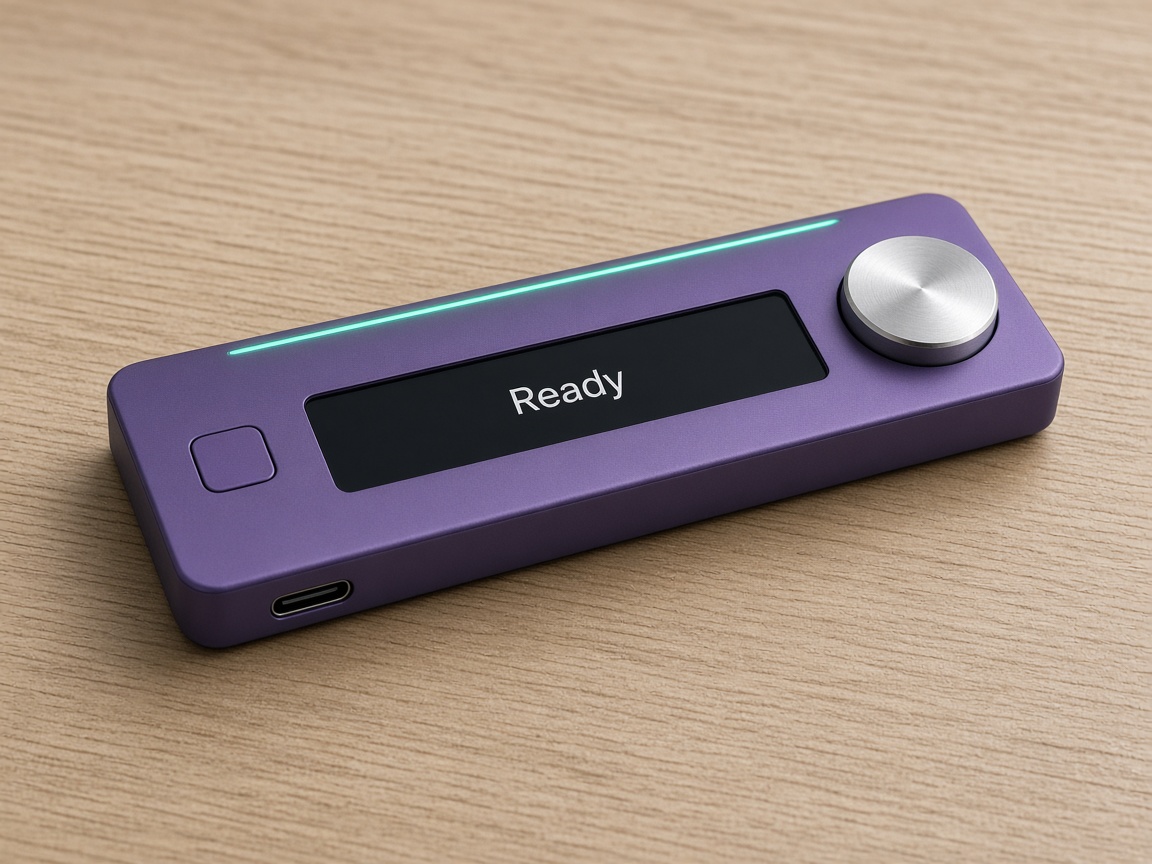
The chassis is matte violet aluminum, low and wide, with softened corners. It lies flat on a desk rather than standing up. The word Aurora Root is engraved under the screen in small capitals.
There is no camera, no fingerprint pad, and no second display. The only window is the long rectangle the chip paints.
Dial and square key
The silver dial at the right end is the confirm. It is pressed inward. A signature leaves the chip only after that press. The small square key at the left steps through what the line is showing, or clears it.
A PIN is entered with the same two controls: turn the dial to change a digit, press to accept it, and use the square key to go back. The computer keyboard is not part of that step.
Line, cable, cell
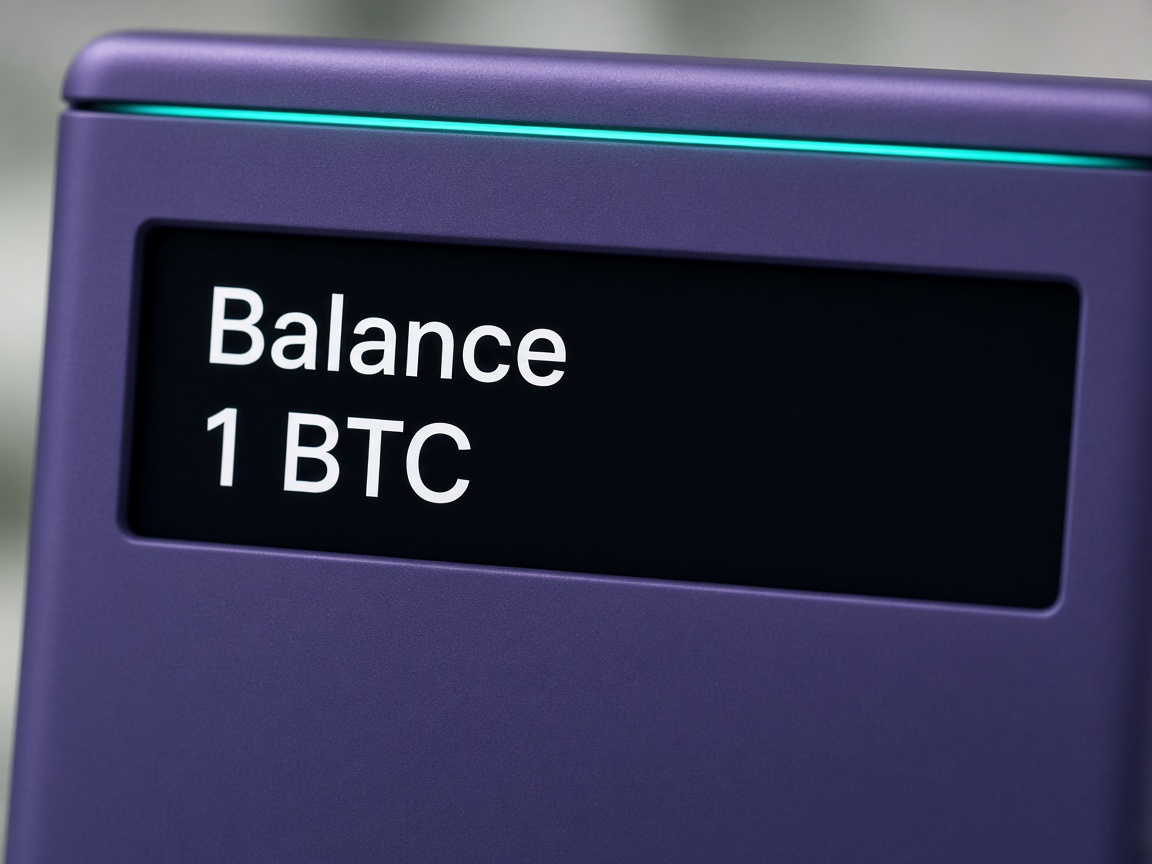
The screen is a horizontal black panel. During setup it shows the recovery phrase a single time. During a reading it shows the request the chip is willing to sign. Pixels on that panel are drawn by the chip, not by the computer at the other end of the cable.
A teal slit along the top edge lights only while the chip is awake, so it is obvious which object is speaking. USB-C brings the session. Aurora Root does not pair over the air: there is no Wi-Fi and no Bluetooth radio in the rail. A sealed cell can hold the line on long enough to finish reading after the cable is unplugged. The cell does not open a network connection.
A reading describes how those parts work in order. The essays take each habit on its own.